

I just got back from Appian World - a major conference bringing together companies from across the private sector, government, and global markets. The whole thing was deeply AI-driven. New tools, new capabilities, conversations about automation and the future of how we build and work.
And yet, do you know what came up again and again?
Communication.
Not AI. Not headcount. Not stack optimization. Communication.
I heard it from customers. I heard it from talent leaders. I heard it from people who work with developers every single day. And when they talked about the people who stood out - the ones who genuinely impressed them — it wasn't always the most technically gifted person in the room. It was the ones who could communicate clearly, concisely, and confidently.
One thing that really hit me: so many of them said it's rare. Not "nice to have." Rare. As in, they're actively looking for it and not finding it enough.
That should tell you something.
Let's talk about what communication actually means
Because I think there's a misconception here. A lot of people hear "communication skills" and think - okay, I'll be clearer in my Slack messages. Done.
That's not what I'm talking about.
Communication is how you show up, period. It's how you explain a complex concept without making someone feel stupid. It's how you handle a client call when something goes wrong. It's how you present yourself on camera - yes, your background, your lighting, whether your cat decided today was the day to join your demo (it happens, but it matters).
It's how you dress when you're representing your company. How you carry yourself in a room. Whether people leave a conversation with you feeling informed and confident, or confused and a little uneasy.
These aren't soft skills. They're career-defining skills. Especially right now.
Here's the part that worries me
AI is coming for developer headcount. I'm not saying this to be alarmist - I'm saying it because it's already happening and I watched an entire conference of enterprise companies confirm it.
The question is not "will companies need fewer developers?" They will. The question is: who stays?
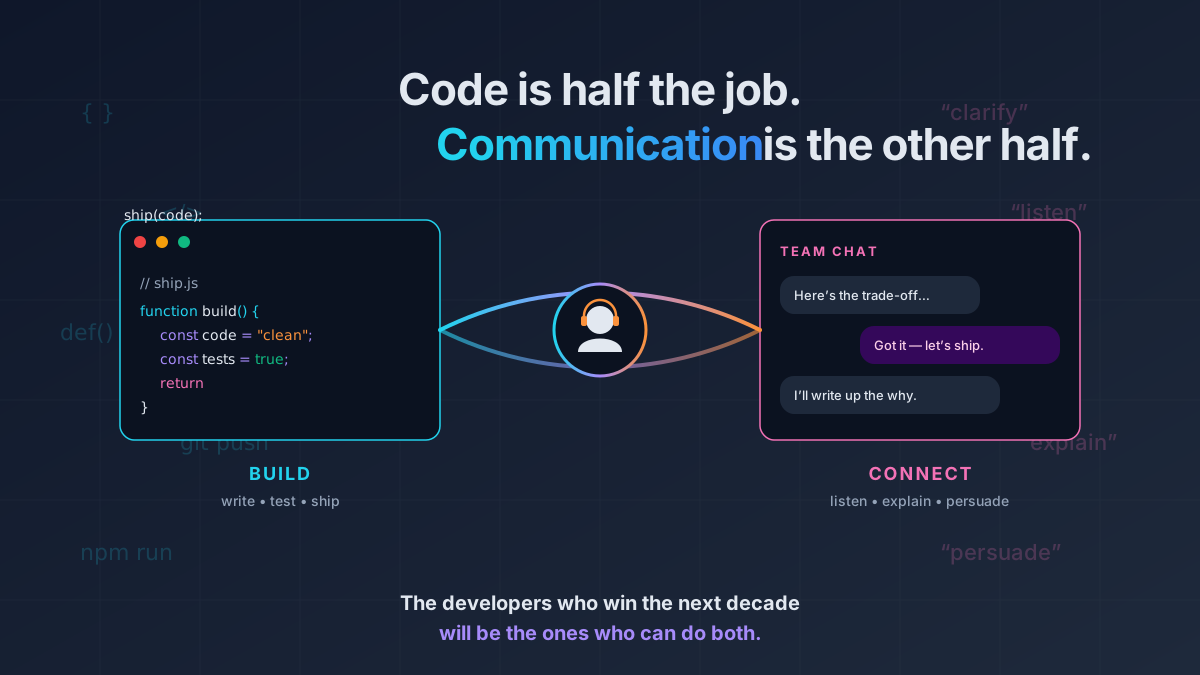
It's not going to be whoever has the cleanest code if they can't explain what they built. It's not going to be whoever has the longest tenure if they can't hold a client conversation. Companies are going to keep the people who bring the full package - technical excellence and the ability to communicate, collaborate, and show up professionally.
And here's what genuinely worries me: a lot of young developers aren't taking this seriously. They're heads-down in their work, which I completely respect - the technical craft matters enormously. But the mentality of "I'll let my code speak for itself" is becoming a liability, not a virtue.
Your code won't be in the room when your manager is deciding who's on the team next year. You will.
What needs to change
Two things, honestly.
First, if you're a developer right now, you need to be investing in two areas simultaneously: your AI fluency (not just using AI tools but genuinely understanding how to leverage them to make you more productive and valuable) and your communication and professional presence. Both. Not one or the other.
Second, if you lead a team of developers or you're responsible for talent - this is a coaching and development conversation your team needs to be having. Not as a performance issue. As a future-readiness investment.
The developers who thrive in the next five years will be the ones who bridge the gap between technical excellence and human connection. That combination is rare. And rare is exactly where you want to be.
If this resonates and you're thinking your team could use support building those communication skills - or if you're a developer trying to figure out how to position yourself in an AI-saturated market - let's talk.
Book a quick call with me here.
Elena Agaragimova is a career coach, speaker, and Head of Talent at Horizon Industries. She works with professionals and organizations navigating performance, career growth, and the future of work. Explore more at elenaagar.com.
And yet, do you know what came up again and again?
Communication.
Not AI. Not headcount. Not stack optimization. Communication.
I heard it from customers. I heard it from talent leaders. I heard it from people who work with developers every single day. And when they talked about the people who stood out - the ones who genuinely impressed them — it wasn't always the most technically gifted person in the room. It was the ones who could communicate clearly, concisely, and confidently.
One thing that really hit me: so many of them said it's rare. Not "nice to have." Rare. As in, they're actively looking for it and not finding it enough.
That should tell you something.
Let's talk about what communication actually means
Because I think there's a misconception here. A lot of people hear "communication skills" and think - okay, I'll be clearer in my Slack messages. Done.
That's not what I'm talking about.
Communication is how you show up, period. It's how you explain a complex concept without making someone feel stupid. It's how you handle a client call when something goes wrong. It's how you present yourself on camera - yes, your background, your lighting, whether your cat decided today was the day to join your demo (it happens, but it matters).
It's how you dress when you're representing your company. How you carry yourself in a room. Whether people leave a conversation with you feeling informed and confident, or confused and a little uneasy.
These aren't soft skills. They're career-defining skills. Especially right now.
Here's the part that worries me
AI is coming for developer headcount. I'm not saying this to be alarmist - I'm saying it because it's already happening and I watched an entire conference of enterprise companies confirm it.
The question is not "will companies need fewer developers?" They will. The question is: who stays?
It's not going to be whoever has the cleanest code if they can't explain what they built. It's not going to be whoever has the longest tenure if they can't hold a client conversation. Companies are going to keep the people who bring the full package - technical excellence and the ability to communicate, collaborate, and show up professionally.
And here's what genuinely worries me: a lot of young developers aren't taking this seriously. They're heads-down in their work, which I completely respect - the technical craft matters enormously. But the mentality of "I'll let my code speak for itself" is becoming a liability, not a virtue.
Your code won't be in the room when your manager is deciding who's on the team next year. You will.
What needs to change
Two things, honestly.
First, if you're a developer right now, you need to be investing in two areas simultaneously: your AI fluency (not just using AI tools but genuinely understanding how to leverage them to make you more productive and valuable) and your communication and professional presence. Both. Not one or the other.
Second, if you lead a team of developers or you're responsible for talent - this is a coaching and development conversation your team needs to be having. Not as a performance issue. As a future-readiness investment.
The developers who thrive in the next five years will be the ones who bridge the gap between technical excellence and human connection. That combination is rare. And rare is exactly where you want to be.
If this resonates and you're thinking your team could use support building those communication skills - or if you're a developer trying to figure out how to position yourself in an AI-saturated market - let's talk.
Book a quick call with me here.
Elena Agaragimova is a career coach, speaker, and Head of Talent at Horizon Industries. She works with professionals and organizations navigating performance, career growth, and the future of work. Explore more at elenaagar.com.


